
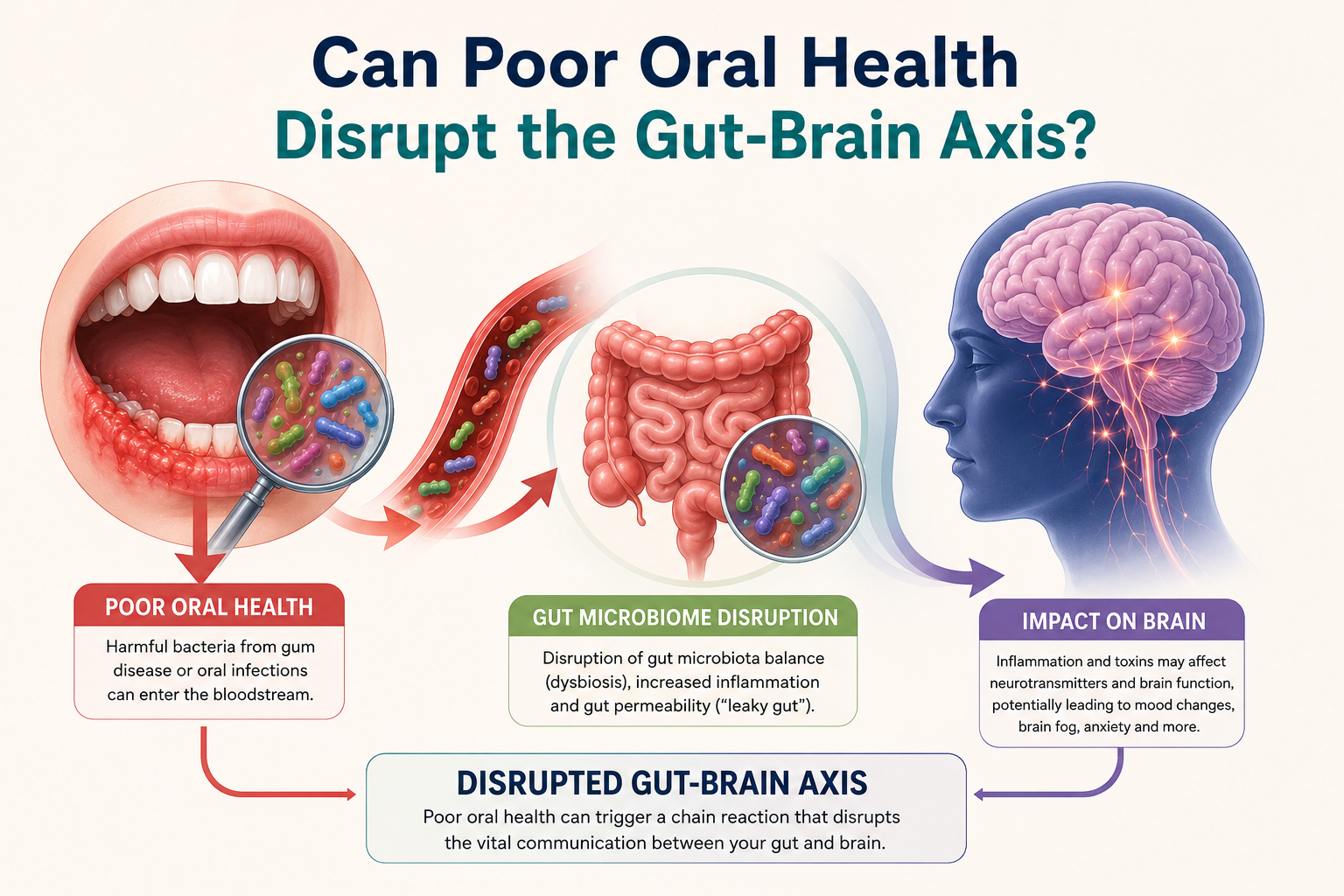
In the realm of functional medicine, the intriguing connection between oral health and the intricate balance of the gut-brain axis is gaining recognition. Our bodies are complex systems where each part interacts with the others. Discovering how dental health can influence mental and digestive well-being offers an opportunity to enhance overall health. In this blog, we explore how poor oral hygiene may impact the vital communication line between your gut and brain.
Understanding the Gut-Brain Axis
The gut-brain axis is a bidirectional communication network that links your digestive tract to your brain. This intricate system involves the nervous system, hormones, and gut microbiota, playing a crucial role in influencing mood, digestion, and overall health. Researchers continue to uncover the significant impact these interactions have, emphasizing the importance of maintaining a balanced gut microbiome for optimal cognitive function.
What’s fascinating about the gut-brain axis is how it’s implicated in diverse health outcomes. For instance, stress experienced in the brain can affect gut function, possibly exacerbating conditions like Irritable Bowel Syndrome. Conversely, gut issues can impact the brain, potentially contributing to mental health conditions like anxiety and depression. Such insights reinforce the need for integrated approaches to healthcare that consider these complex interconnections.
How Oral Health Links to the Body’s Communication Network
Poor oral health can lead to the growth of harmful bacteria, which may not stay confined to the mouth. These bacteria can enter the bloodstream, potentially disturbing the gut microbiota balance, thus affecting the gut-brain axis. Emerging studies suggest that maintaining oral hygiene might play a more extensive role than merely preventing cavities and gum disease. It could serve as a preventive measure for broader health issues.
Apart from bacteria, oral infections can also release pro-inflammatory cytokines into the bloodstream. These molecules have the potential to disrupt systemic health, leading to inflammatory responses elsewhere in the body, including the digestive system. This cascade of events underscores the vital role oral health plays in maintaining the body’s communication channels. Understanding this can motivate us to look beyond the conventional benefits of dental care, considering its implications for the gut-brain relationship.
The Impact of Inflammation
Oral infections and gum diseases often lead to inflammation. Chronic inflammation is a body-wide issue that can influence the gut environment and disrupt its interaction with the brain. This can contribute to digestive discomfort and mood changes. The mouth, being the entry point to our digestive system, sets the stage for how well our system can function, reinforcing the need for oral health in managing inflammation-related conditions.
Chronic periodontitis, a common gum disease, can result in the release of inflammatory mediators that exacerbate inflammatory processes throughout the body. These mediators can alter the gut microbiota, further compromising its ability to maintain homeostasis within the gut-brain axis. Recognizing this connection could pave the way for more comprehensive care plans, aiming to address inflammation at its root, including through enhancing oral hygiene.
Oral Hygiene Practices to Support Overall Wellness
Adopting good oral hygiene practices, such as regular brushing, flossing, and dental check-ups, can significantly reduce harmful bacteria growth. By keeping oral health in check, you support a balanced gut microbiota and a healthy gut-brain axis. It’s not merely about aesthetics; oral hygiene forms an essential part of the holistic approach to healthcare, aiming to mitigate broader health risks by maintaining mouth cleanliness Oral Care Tips for Better Health.
In addition to regular dental care, a diet rich in probiotics and fiber may further support oral and gut health. Foods that promote a balanced microbiome, such as yogurt and leafy greens, are not only beneficial for the gut but can also contribute to healthier gums and teeth. This dual benefit highlights the interconnected nature of our health systems, encouraging lifestyle choices that support both oral and overall bodily wellness.
Functional Medicine’s Role in Addressing the Connections
Functional medicine aims to treat the body as an interconnected whole. By understanding how oral health impacts the gut-brain axis, functional medicine practitioners can offer comprehensive care strategies that enhance overall well-being. This approach advocates for patient-centered care, focusing on identifying and addressing the underlying causes of diseases, rather than just alleviating symptoms. With this holistic view, the role of oral health becomes a pivotal part of sustained wellness.
As we continue to explore and validate these connections, functional medicine frameworks are likely to become increasingly essential in both preventive and therapeutic contexts. Assessing oral health as part of a diagnostic process can unearth insights that traditional approaches might overlook. This broadens the scope of available treatment pathways, helping individuals achieve a more balanced state of health. Whether through dietary adjustments, lifestyle changes, or targeted therapeutic interventions, functional medicine provides a robust platform for fostering overall harmony between the gut, brain, and oral health.
For further information, to schedule an appointment or please contact Enovative Wellness at 602.614.9905 or visit www.EnovativeWellness.com to learn more.
