
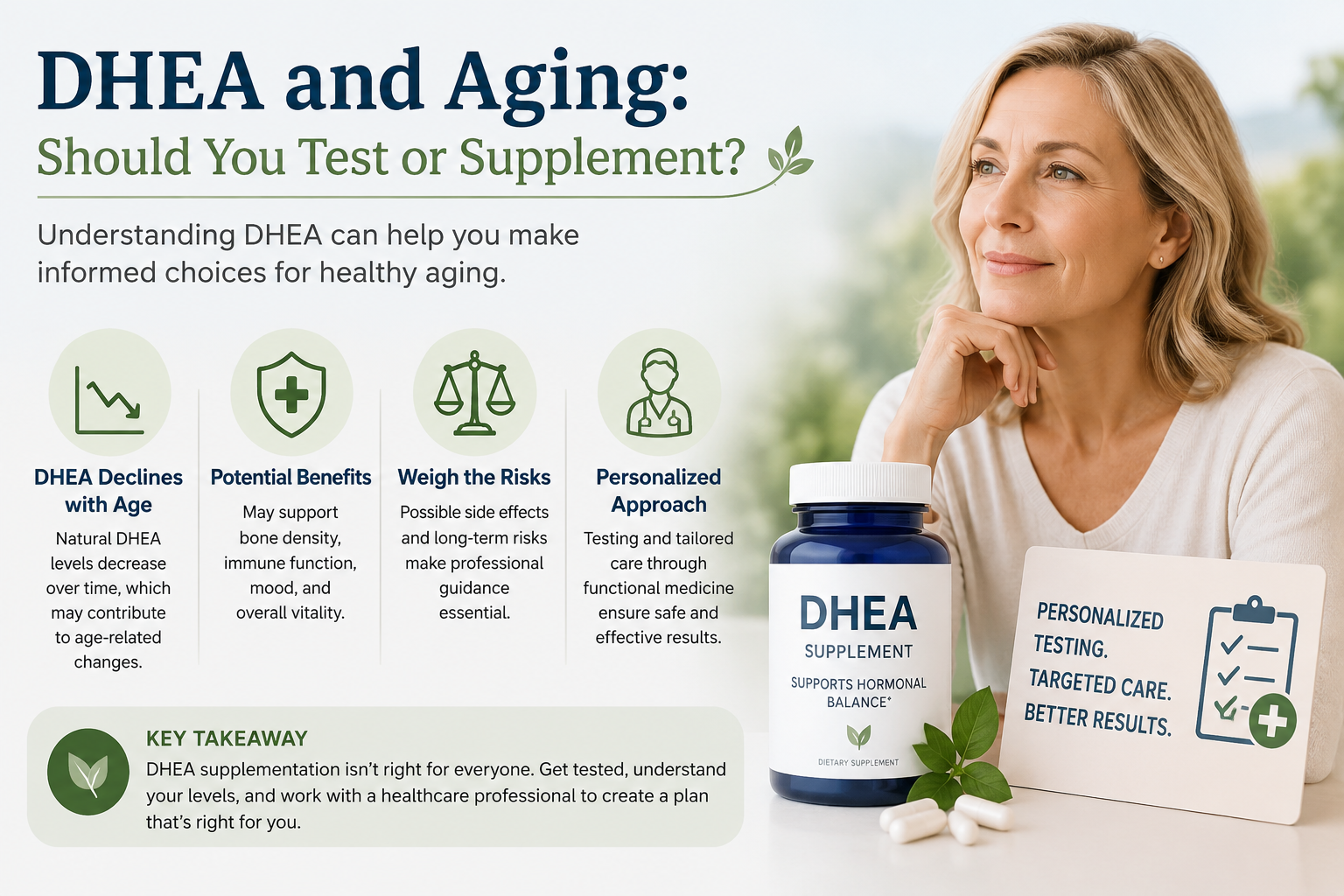
 Navigating the world of health supplements can be daunting, especially as we age. One hormone that’s gained considerable interest is DHEA, touted for its potential anti-aging benefits. But should you be testing your levels or considering supplementation? In this blog, we’ll explore the role of DHEA in the aging process and help you make an informed decision.
Understanding DHEA and Its Role
DHEA, or dehydroepiandrosterone, is a hormone produced primarily by the adrenal glands. It’s a precursor to male and female sex hormones and plays a key role in a variety of bodily functions. As we age, the natural production of DHEA declines, which has led many to consider supplementation.
This decline in DHEA production may contribute to various age-related changes. Interestingly, some studies suggest that maintaining adequate levels of DHEA might help counter some effects of aging, such as decreased muscle mass and cognitive decline. It’s essential to understand how integral DHEA is to the body’s <a title = "hormonal balancehormonal balance before considering supplementation.
Moreover, DHEA production isn’t isolated; it’s closely linked with adrenal health, which could be impacted by stress and lifestyle factors. Addressing these elements is crucial as part of a holistic health plan, emphasizing why personalized health assessments are so vital.
The Link Between DHEA and Aging
Research suggests that DHEA can have several effects on aging, including improved skin health, increased bone density, and enhanced immune function. However, the scientific community remains divided on its overall efficacy and safety, particularly in long-term use.
For example, some studies have pointed to potential benefits on bone density, which can be a crucial consideration for aging individuals. Despite these potential benefits, it’s important to remember that not all findings are conclusive, and more research is needed to establish DHEA’s long-term effectiveness.
Balancing potential benefits against possible risks is fundamental. Some researchers warn that long-term supplementation might interfere with the body’s natural hormone regulation, suggesting cautious consideration, especially when dealing with chronic conditions.
Benefits and Risks of DHEA Supplementation
While some individuals report benefits like increased vitality and improved mood, DHEA supplementation isn’t without its risks. Potential side effects include hormonal imbalances and increased cancer risks. It’s crucial to weigh these factors carefully with a health professional.
Consider real-world examples, where individuals experienced hormonal changes, such as altered estrogen and testosterone levels. These changes might have unintended consequences, such as increased risk of certain cancers or cardiovascular problems.
Consequently, these considerations emphasize the importance of customized health strategies. Consulting with a functional medicine practitioner could provide a more personalized approach, with comprehensive hormone testing and ongoing monitoring to mitigate potential risks.
The Role of Functional Medicine
Functional medicine offers a holistic approach to health, focusing on personalized care. Practitioners often use comprehensive testing to determine appropriate supplementation, including DHEA. This can be an effective way to tailor health interventions to individual needs.
The focus on individual care in functional medicine means looking beyond symptoms to the root causes of health issues. For those considering DHEA, hormone level testing can provide essential data, enabling practitioners to develop precise intervention strategies.
Factors to Consider Before Supplementation
Before starting DHEA supplementation, consider factors such as age, current health status, and existing hormone levels. It is also essential to consult with a healthcare provider to ensure that supplementing DHEA is a safe and appropriate choice for your personal health needs.
Addressing broader lifestyle aspects can be instrumental before adding DHEA to your regimen. This includes evaluating diet, exercise habits, stress levels, and other health conditions that might affect or be affected by hormone levels.
After a thorough health review, a detailed strategy can be crafted that includes not just DHEA but possibly a suite of interventions, maximizing the potential for positive outcomes.
For further information, to schedule an appointment or please contact Enovative Wellness at 602.614.9905 or visit www.EnovativeWellness.com to learn more.
