
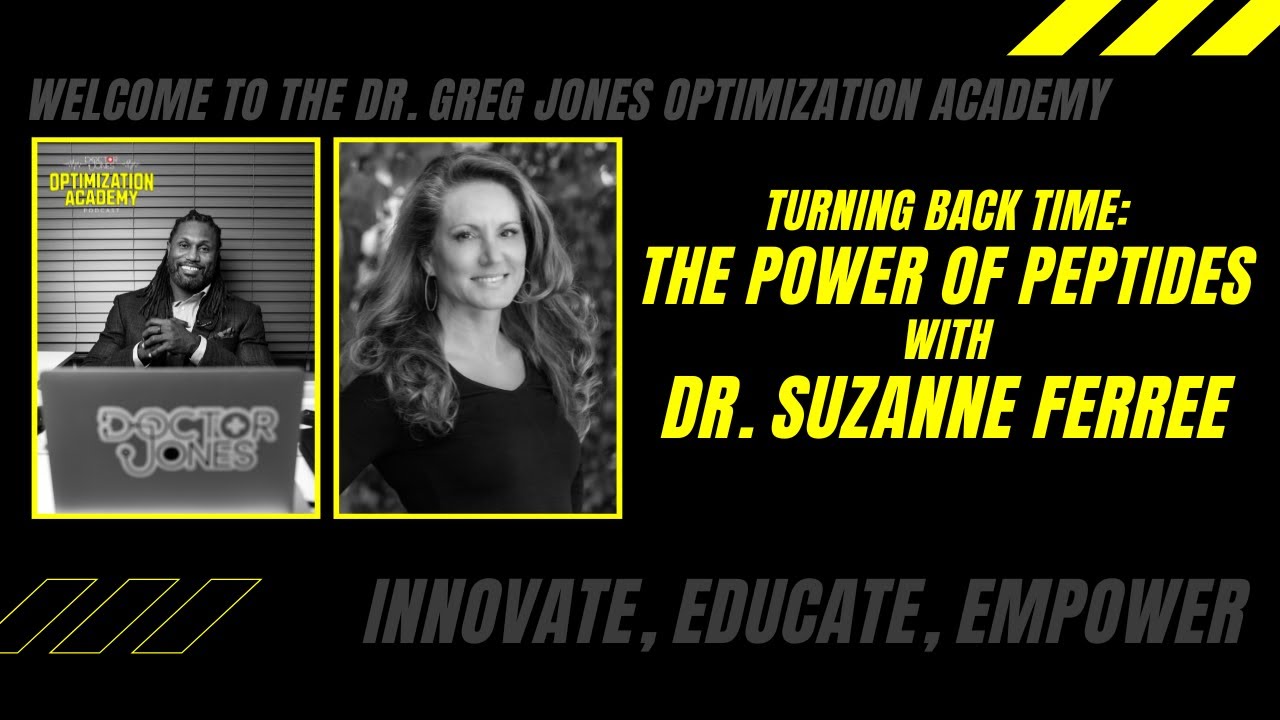
Imagine if your body had a built-in repair system — a way to heal faster, recover stronger, and feel younger. This isn’t science fiction; it’s the promise of peptide therapy. In a world where modern medicine often stops at pharmaceuticals, peptides are stepping into the spotlight as a transformative tool for healing, regrowth, and rejuvenation. Dr. Suzanne Ferree, a pioneer in peptide therapy, joined Dr. Greg Jones on his podcast to dive into the science and share how peptides are changing lives, including her new book Counterclockwise.
Let’s explore how peptides are being used for healing, athletic recovery, and even optimizing cognitive health.
What Are Peptides and Why Do They Matter?
At their core, peptides are tiny protein fragments — short chains of amino acids — that act as messengers in the body. They tell your cells what to do, from healing injuries to balancing hormones.
Dr. Ferree shared a simple analogy: think of peptides as general contractors for your body. Each peptide has a specific job, like instructing your cells to repair tissue, reduce inflammation, or build muscle. The best part? They only work where they’re needed, which makes peptide therapy highly targeted and safe.
If you’ve heard of insulin or growth hormone, you’re already familiar with peptides. But these aren’t just tools for athletes or bodybuilders. They’re now being used to treat conditions like gut disorders, slow healing, and even cognitive decline.
The State of Peptide Therapy Today
Peptide therapy is growing, but it faces challenges. Recent FDA regulations have limited access to some of the most popular peptides. While this has created confusion, it’s not a signal to lose hope.
Dr. Ferree explained that peptides weren’t pulled due to safety concerns. Instead, shifts in the pharmaceutical landscape — like resolving shortages of popular weight-loss peptides — have impacted compounding pharmacies.
But the field isn’t slowing down. New peptides are being developed every day. The future holds promise as researchers and pharmacies pivot to discover alternatives that are just as effective, if not better.
For patients, this means continuing to work with knowledgeable practitioners who stay ahead of these changes.
Peptides for Healing and Faster Recovery
One of the most exciting uses for peptides is in healing and recovery. Injuries, surgeries, chronic pain — peptides can help your body bounce back faster by enhancing its natural repair mechanisms.
Take, for example, BPC-157, a peptide known for its gut and tissue healing powers. Dr. Ferree highlighted real-life stories of patients who avoided invasive surgeries thanks to peptide therapy.
One case involved a patient with avascular necrosis — a condition that typically leads to hip replacement surgery. Through a combination of peptides, they were able to restore blood flow and heal the hip.
Peptides like mechanical growth factor (MGF) also play a key role in muscle recovery and repair. For athletes or even weekend warriors, this can mean the difference between being sidelined by an injury and getting back to their sport in record time.
“Peptides give the body what it needs to heal like a younger version of itself,” said Dr. Ferree. This not only accelerates recovery but helps prevent the long-term wear and tear associated with aging.
Boosting Performance with Peptides
Peptides aren’t just for healing; they’re also making waves in athletic performance. While world-class athletes bound by anti-doping rules can’t use them, peptides like Tesamorelin and CJC-1295 have become favorites among fitness enthusiasts.
Why? Peptides accelerate recovery and enhance endurance by improving how cells generate energy. With faster recovery, athletes can train harder and more frequently.
Dr. Ferree shared her experience as a competitive powerlifter, saying peptides allow her to recover quicker after training sessions. “It’s not necessarily about getting stronger overnight but being able to train smarter and more often,” she explained.
Even for non-athletes, the ability to regain strength and stamina can make everyday activities more enjoyable. Whether it’s cycling, hiking, or chasing after grandchildren, peptides help people stay active longer.
Supporting Brain Health With Peptides
As we age, cognitive health becomes a top priority. Memory lapses, brain fog, and slower thinking can creep in, making even simple tasks feel harder. Peptide therapy offers a fresh approach to keeping your brain sharp.
Dr. Ferree detailed how peptides like Dihexa, BPC-157, and Selank can improve focus, memory, and even creativity. One patient, a musician, reported being able to write songs effortlessly again after incorporating peptides into his regimen.
Emerging research also points to the role of peptides in treating insulin resistance in the brain, a contributing factor to Alzheimer’s disease. Microdosing GLP-1 receptor agonists, traditionally used in diabetes care, is now being explored as a way to protect brain function.
The goal isn’t just to prevent cognitive decline but to enhance performance, allowing high-level professionals and creatives to continue excelling in their fields.
A Guide to Peptides: Dr. Ferree’s New Book
Dr. Ferree’s new book, Counterclockwise, is a must-read for anyone curious about peptides. Written for patients and practitioners alike, it breaks down how to use peptides for optimal health.
Rather than a dense scientific tome, the book is accessible and focused on practical applications. Each chapter dives into specific health concerns — from gut health to skin rejuvenation — with actionable tips and peptide recommendations.
Whether you’re a biohacker or someone looking to feel younger and healthier, the book offers a roadmap to using peptides effectively.
Final Thoughts
Peptide therapy is rewriting the rules of health and recovery. Whether you’re looking to heal faster, optimize your athletic performance, or keep your mind sharp, peptides offer a targeted approach to staying your best — at any age.
In the words of Dr. Ferree, this isn’t about magic wands or quick fixes. Peptides work because they activate your body’s innate ability to heal and thrive. Combine them with good sleep, proper nutrition, and regular exercise, and you’ve got a formula for longevity that feels almost limitless.
If you’re ready to explore what peptide therapy can do for you, the naturopathic doctors at Enovative Wellness are here to help.
At Enovative Wellness, we’ve developed Peptide Therapy programs with the aim to optimize treatment effectiveness, and improve achievements of our patients’ specific goals. Call us at (602) 614-9905 or contact us here.
And don’t forget to grab a copy of Counterclockwise for a deeper dive into how peptides can help you turn back the clock.
